https://storage.googleapis.com/ddhacjiljuuhie/robotic-museum-guide.html
When we think of museums, we typically think of creative human arts. People love to observe the passion and talent that goes into creating these masterpieces. However, many are scared that robots will start to replace humans in fields like this, but I’m interested to see how they can work together. If done correctly, a partnership between these two could really bring museums to life. There has been a movement in recent years to make museums more interactive.
According to industry studies, only 20% of people are engaged with static museums, whereas using interactive exhibits can boost those numbers to 60% to 80%. That is a huge increase! Bringing these numbers up is exactly how you get people to recommend your museums to friends and family. Interactive museums can come in all shapes and sizes, but nowadays robots are leading the charge.
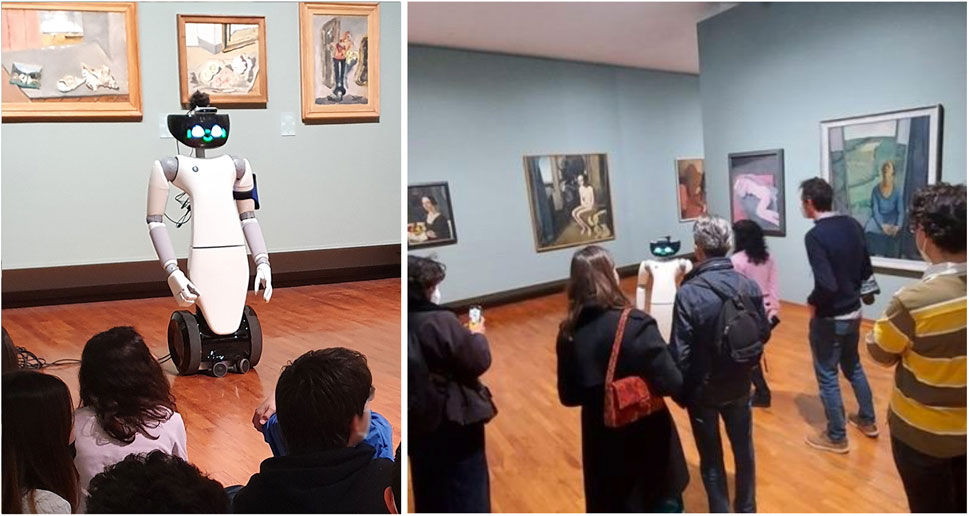
A robotics engineer can contribute heavily to the museum world by revolutionizing both visitor engagement and behind the scenes preservation. As discussed in class regarding public accessibility and interactive design, mobile guide robots and autonomous perception systems can dynamically navigate crowded galleries, lead tours, and make complex historical or scientific concepts accessible to diverse audiences. Furthermore, precision robotics and automated scanning systems can assist archivists in handling fragile, irreplaceable artifacts in storage rooms with micron level accuracy, minimizing human error and accidental damage during digitization and conservation. (We saw this example in one of our initial project presentations)

https://www.independent.co.uk/tech/university-of-glasgow-glasgow-gps-james-watt-scotland-b2492774.html
Conversely, studying the museum world offers profound lessons that can be directly applied back to the field of robotics. Class discussions emphasized the importance of user centered design, emotional resonance, and intuitive human robot interaction. When designing robots for public spaces like museums, engineers quickly realize that machines cannot operate in isolation, they must account for unpredictable human behavior, social cues, and diverse psychological needs. Adopting this human first ethos from museum curation ensures that future roboticists build systems that are not only technically robust, but also empathetic, accessible, and naturally integrated into human society.
Ultimately, bridging robotics and museums refines our understanding of technology as a medium for cultural storytelling rather than just a mechanical tool. Museums challenge engineers to look beyond efficiency and algorithms, prompting us to consider how technology shapes public curiosity, memory, and spatial experience. By treating cultural institutions as living laboratories, we learn to design machines that respect context, honor history, and foster genuine engagement with the people they serve.
https://www.bing.com/images/search?view=detailV2&ccid=KinNEpbf&id=23640A4F9DFDBFBA4E966C631681734F3269775D&thid=OIP.KinNEpbf0UkRtoQH2s0u4QHaD8&mediaurl=https%3a%2f%2fwww.frontiersin.org%2ffiles%2fArticles%2f1323675%2ffrobt-10-1323675-HTML%2fimage_m%2ffrobt-10-1323675-g010.jpg&cdnurl=https%3a%2f%2fth.bing.com%2fth%2fid%2fR.2a29cd1296dfd14911b68407dacd2ee1%3frik%3dXXdpMk9zgRZjbA%26pid%3dImgRaw%26r%3d0&exph=516&expw=969&q=robot+in+museums&FORM=IRPRST&ck=77B9837F4266BE7ACAC7018EE0A46065&selectedIndex=30&itb=0

Leave a Reply